OpenRouter Cuts Three Providers After Months of Prompt Theft at AI Hosting Firms
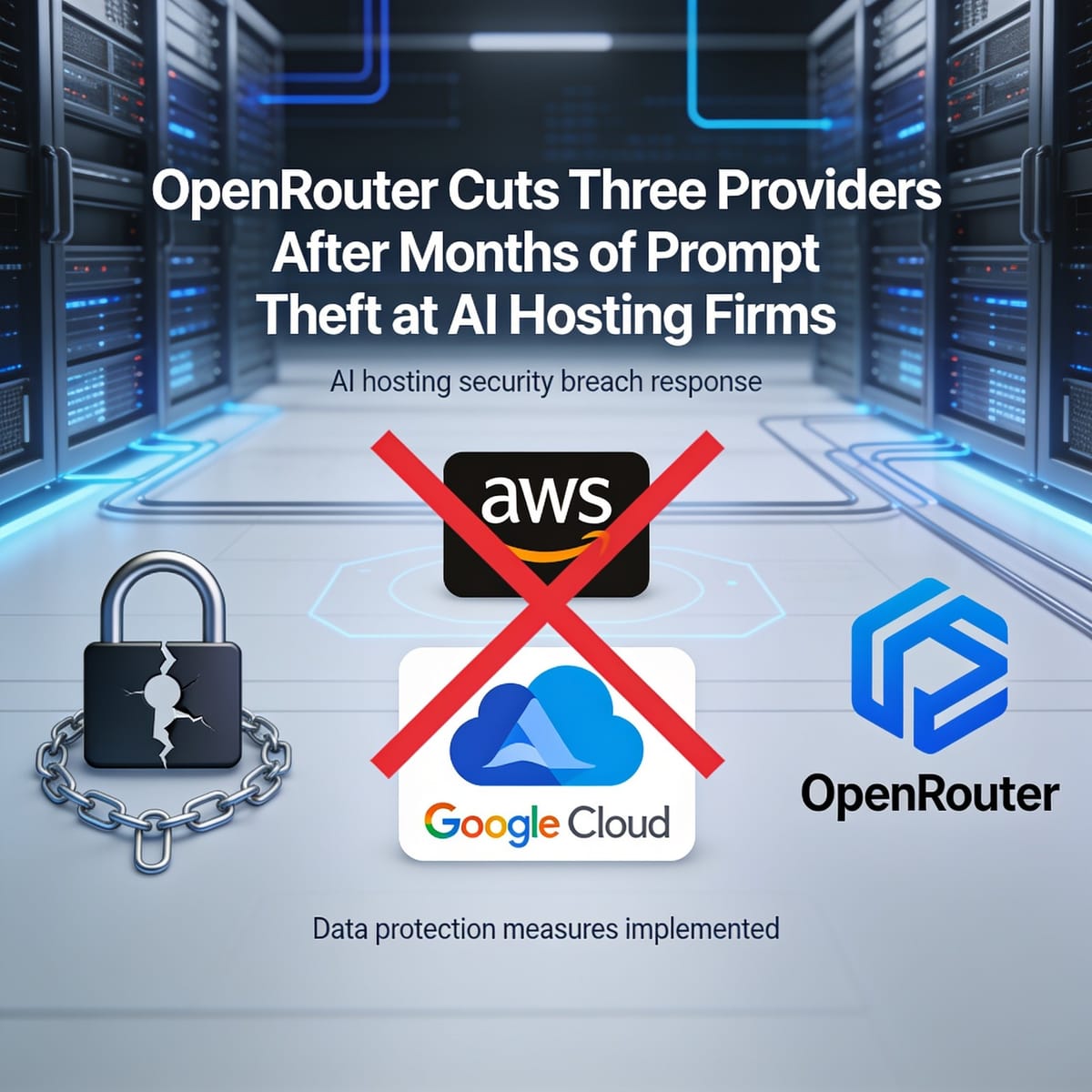
Attackers spent months stealing data from inside three AI inference providers, and none of the three knew about it until outside researchers told them, according to the industrial cybersecurity firm Dragos. Some of the stolen requests had been marked Zero Data Retention, a setting meant to guarantee that a prompt is never stored. In response, OpenRouter, a gateway that routes customer AI requests to a pool of third-party providers, removed three providers from its platform, pulled 125 endpoints out of Zero Data Retention eligibility, and notified all potentially affected customers. The company said its own systems were not breached, and that the earliest of the three intrusions began in mid-July.
The findings came from canary token research that seeded roughly two million prompts with unique web links and credentials between July and November, then watched for anyone using them. Because a planted secret can only be learned from the prompt that carried it, any use of it proves someone read that prompt. The largest breach involved a couple hundred planted AWS keys, each sent in exactly one request during short windows in late October, and every request in those windows was taken. Some of the copied requests had been rejected before a model ever ran, which suggests the attacker was capturing traffic at the first point of arrival rather than deeper in the inference stack. The thief tested keys within hours, listed S3 buckets, searched Secrets Manager and Parameter Store, and tried to create Bedrock API keys and add IAM users to keep access, generating tens of thousands of AWS API calls. One attacker appears to have compromised two providers at once from a single rented server, and later brought in ARTEX, an AI-driven penetration testing framework, to confirm the keys it already held were still live.
The second finding required no break-in at all. Sellers on an AI inference marketplace listed models at the lowest prices, switched on request logging, and simply collected what flowed through. The operators looked like individuals on home connections, including one working from a Mac on home broadband in France who pulled passwords from two prompts and tried root SSH logins by hand. One planted key traveled through a different router that quietly forwarded some of its traffic to the marketplace, a hop no customer was told about. A Chinese AI lab, which the research does not name, fetched secret links from more than half of the seeded prompts sent to its models between July and October, including about two-thirds of requests marked for no data collection. Twenty-four days after one prompt was sent, its link appeared in a chat on Feishu, and was opened within two minutes from three desktops and three phones in Beijing and Shanghai. Among the providers that went public, Phala reported an attacker took control of an inference server and could view request data in flight, Together AI said an unauthorized party downloaded stored prompt samples after a credential was committed to a public GitHub repository, and Novita confirmed a routing misconfiguration sent some MiniMax requests on to MiniMax's official API.
The researchers' advice starts from a single hard limit: a privacy flag binds only the first hop, and AI agents will send whatever they can read, credentials included. Where a prompt goes is a choice, and a customer who does not choose hands that choice to the lowest price. Self-hosting is the only setup in which no third party reads a prompt, and going directly to a first-tier provider leaves just one company, one contract, and one privacy policy to check. Anyone using a router should pick upstream providers personally instead of accepting the default pool, verify that privacy settings actually change where requests go, and avoid reseller marketplaces, some of whose capacity runs on stolen keys. Planting a fake credential in the context that agents already send acts as a tripwire, with a free Thinkst Canarytoken enough to start, and tools that scrub known credential formats from prompts help as well, though they miss sensitive data that does not look like a key.
Stay secure — stay Wavasec. 🔐